
Experiential learning was a significant learning process for me during this program. Traditional academic readings are very helpful, but the impact of experiential learning is
Far more effective. From my course I am sharing here my prominent experiences which made enormous effect on my learning process.
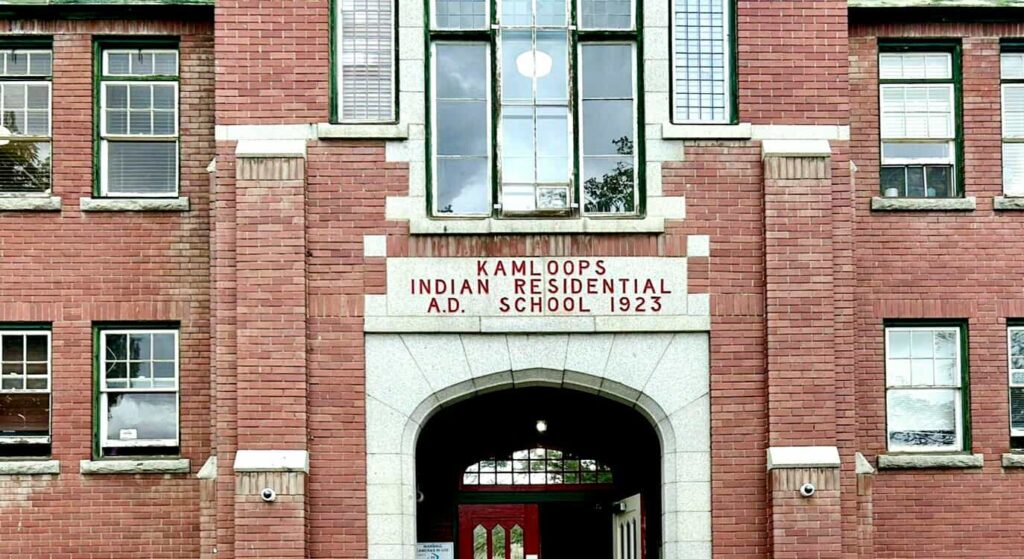
Visit to Kamloops Indian Residential School: As part of course HRSJ 5020, Indigenous ways of knowing land, I along with my course mates visited Kamloops Indian Residential school. From the course reading I learnt about how settlers dispossessed the Indigenous communities from their lands, colonial policies, histories of Residential schools, cultural genocide, intergenerational trauma. Despite that, by standing on the very ground where actually these tortures took place, caused different impression on my mind. This was actually unbearable. One Indigenous elder was there in our group who continuously referring, explaining all rooms, furniture of that time. I saw the rooms where children used to stay and a stair where one child died because one caretaker kicked him down. Hearing these stories while visiting all the rooms, kitchen was extraordinary. I felt I could visualized what happened with the children in there. It was unbearable. Walking through the rooms, I kept thinking of those thousands of children, who were forced to be separated from their parents and their cultures. I understood why the survivors still feel the generational trauma in them. visiting this place also made me realize why Indigenous scholars emphasized about land-based knowledge and why healing is so important for the survivor’s wellbeing. This visit helped me to realize ongoing colonial violence and reinforced my commitments towards Indigenous community of Canada.
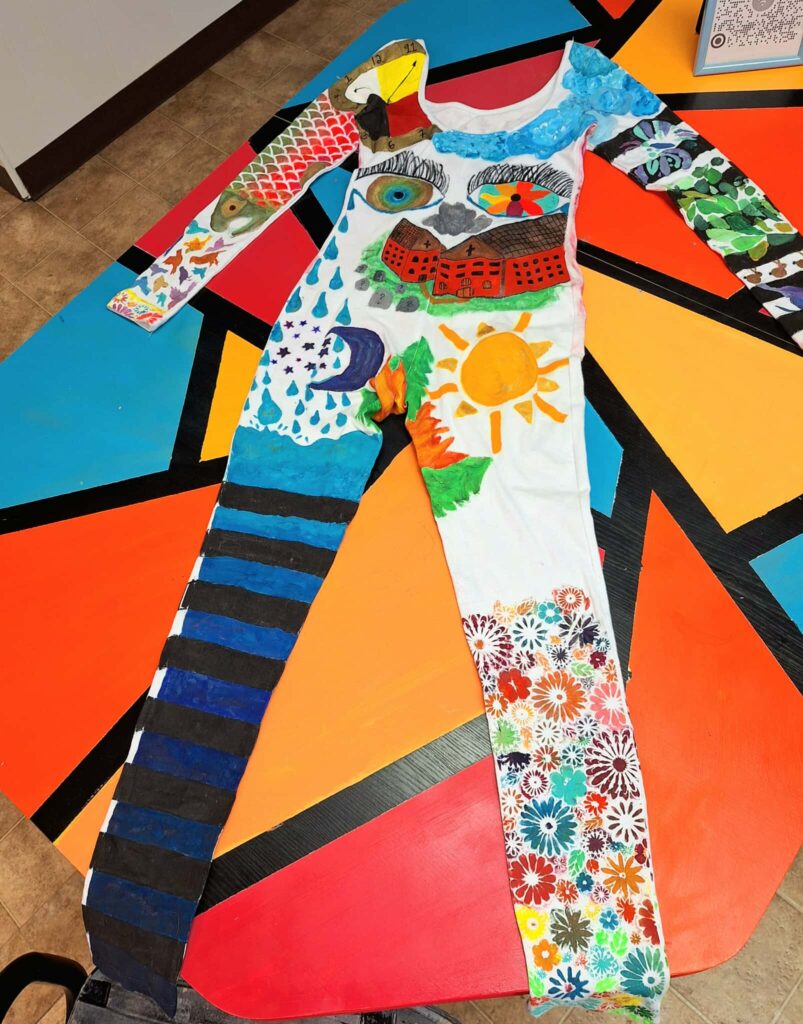
Visit to Same Sky Collective Society My second experiential learning opportunity was to visit ‘Same sky Collective Society, a nonprofit art organization at North Shore. Same Sky has been developed by one MA HRSJ graduate student, supported by local community members. This experience taught me social justice work can be collaborated with creative activities. I along with my course mates visited this place as part of our course HRSJ 5120, settler colonialism: decolonization and responsibility. As part of our ‘Mapping’ activity we went there and experienced how space and human life are interconnected and relational. This visit was very impactful for me because I realized that creative expression of social justice issues can be more thought provoking and last longer in human minds.
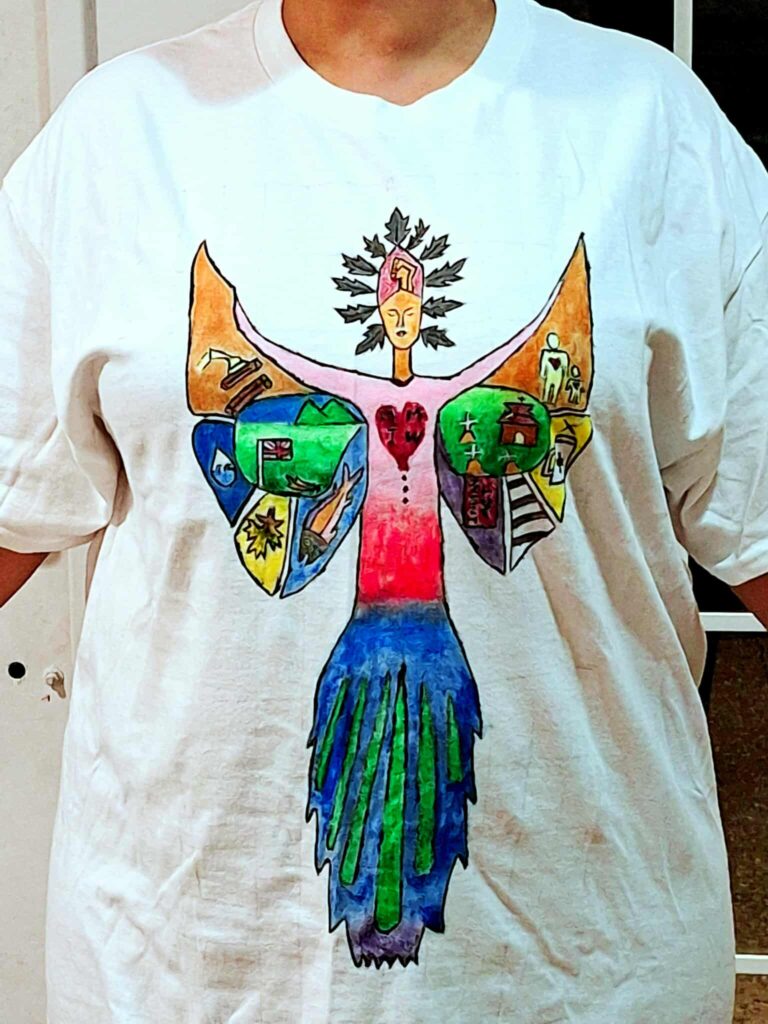
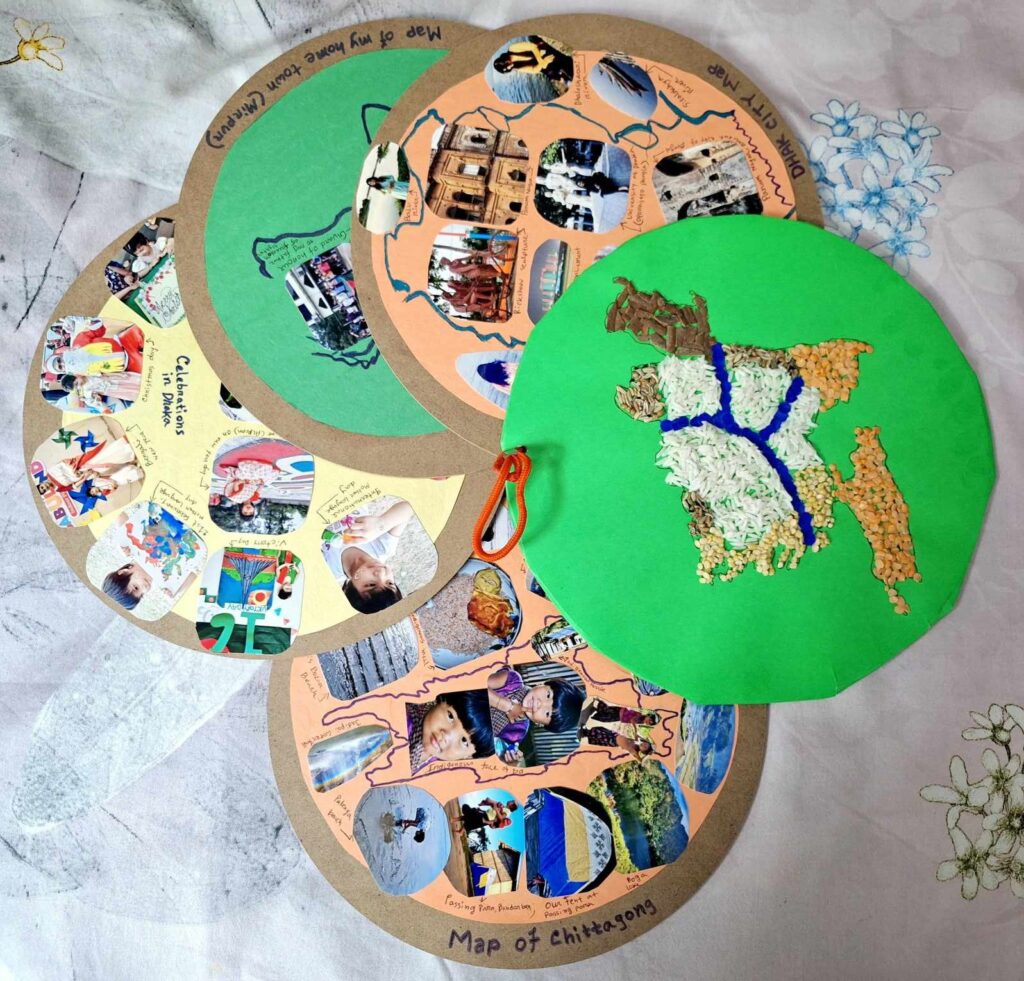
Developing creative project: As part of HRSJ 5120 ‘Settler Colonialism: Decolonization and Responsibility’ course, I developed my creative project, which was another prominent experiential learnings for me. I created a hand painted T-Shirt to explain Indigenous sufferings in Canada and their resilience against it. Starting from settlers land grabbing, resource extraction, water pollution, food insecurity, colonial policies, such as Indian Act, health problems, Missing and murdered women. This experiential learning was meaningful because it taught me how social justice issues can be expressed creatively. As part of ‘Mapping’ assignment, I developed a map of my own country, my city, my town. This was also very enjoyable to show how I am connected to my own land, what is the relationship with my land. This assignment helped me to realize the relationship between the lands and Indigenous communities and how wrong it was to dispossessed them from their own land by using colonial tools, laws and power.
Writing script for a stage drama:
As part of my HRSJ 5150 course I learnt how story telling in the form of stage play or screen play can make an powerful impact against injustice. For this course, I wrote an stage play script named ‘Nodi: The Girl Who Fight for Her Wings’, that shows the journey of a little girl Nodi, how she was forced for child marriage, her resistance and resilience against that. The story is about Nodi, who is a minor girl, reside in one of the villages of Bangladesh. She learnt that her parents are planning for her marriage with a much older man from neighboring village, who happened to be a rich man of the locality. Knowing this, Nodi confronts her parents and her father argued that Nodi should marry because he is under huge social pressure to arrange her marriage as a father. He emphasizes to see around that most girls of her age from good families are married. He mentions it is his and family’s reputation to arrange her marriage with a wealthy man. However, with the help of her lady home tutor she managed to save herself from child marriage in the end.
Through writing this script, I applied the techniques of writing a play those I was taught by instructor. Our instructor is a writer in real life, which helped me tremendously to understand how a writer develops the story through number of conflicts to the climax. I learnt what a story can do but an academic essay cannot. Stories have extra ordinary power to reach to people’s heart, and move them to stand for right causes.
My work: